I'm an engineer, educator, and entrepreneur that has been building digital products for over 20 years with experience in startups, education, technical training, and developer ecosystems.
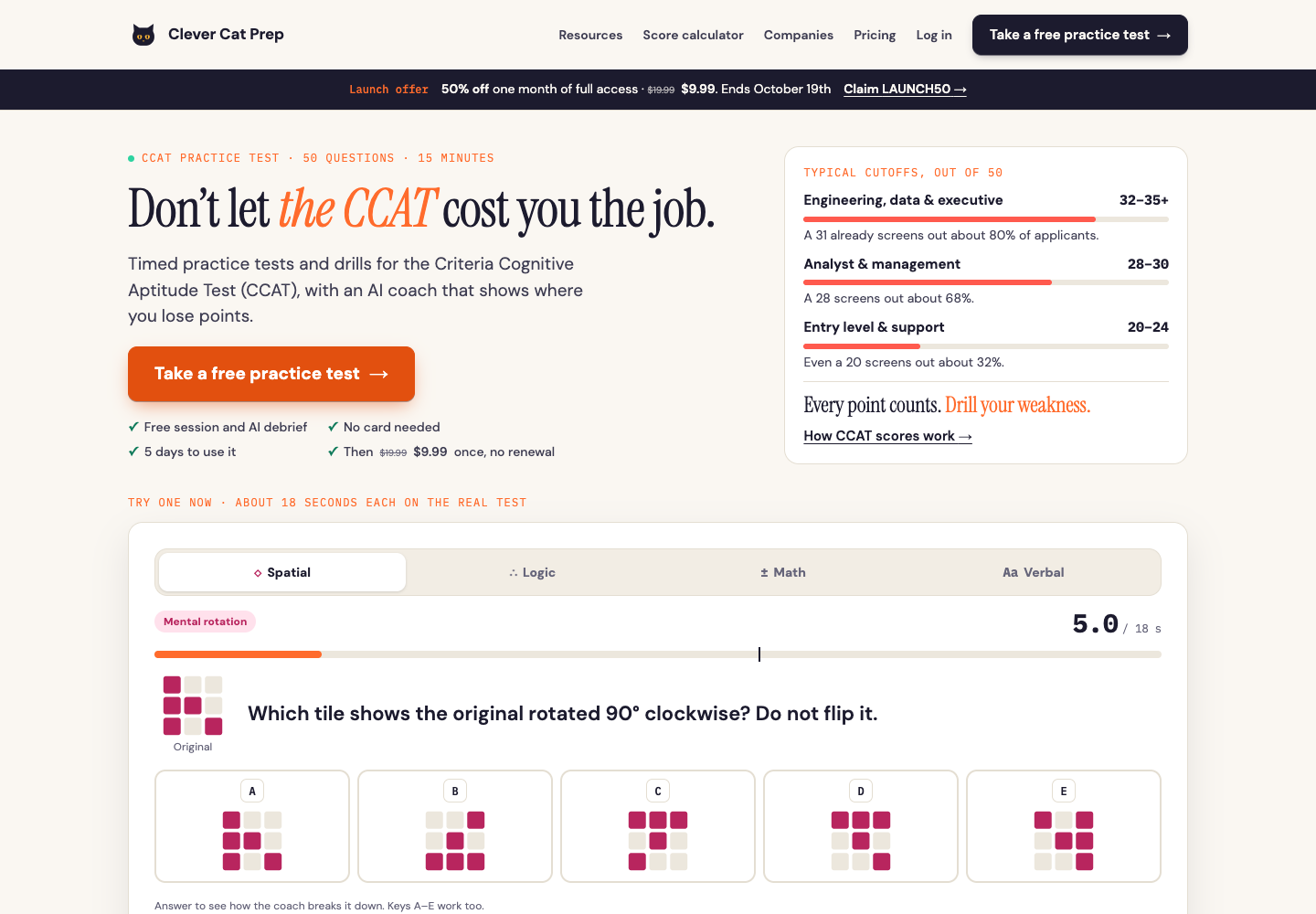
Fifty questions in fifteen minutes means knowing the answer is only half the problem. I built
Clever Cat Prep to help people prepare for the Criteria Cognitive
Aptitude Test with timed practice tests, focused drills, and an AI coach that explains where they
lost points and time. After each test it builds a skip map: what to answer, what to practice, and
when to guess and move on. The first session and AI debrief are free.
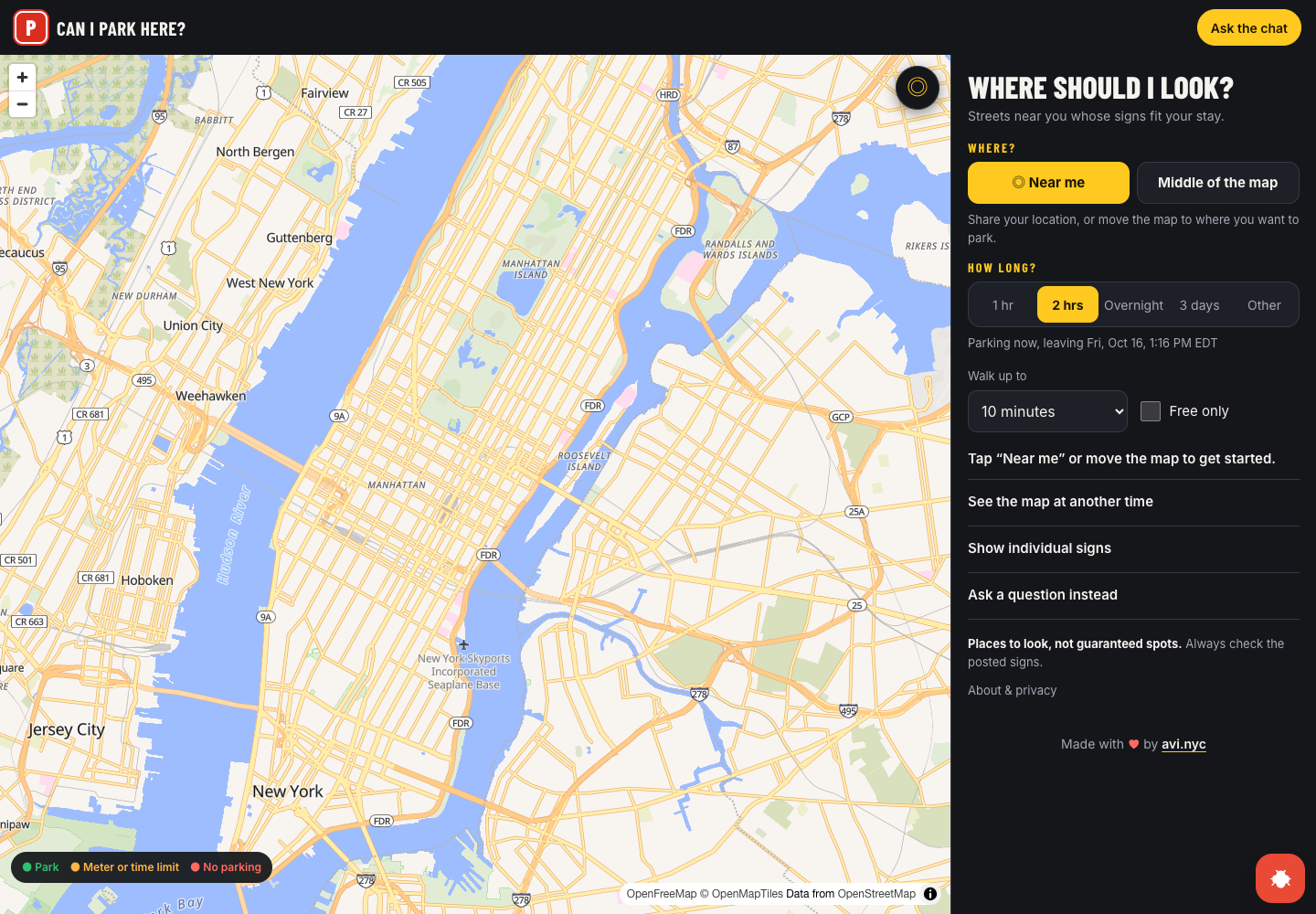
Parking in New York means decoding a stack of signs while someone honks behind you. I built
Free Parking NYC to make that easier. Pick a location, say how long
you're staying, and it finds nearby streets whose parking rules fit, with filters for free parking
and how far you're willing to walk. You can also ask a question in plain English and check the
original sign records. It helps you figure out where to look before you start circling the block.
Twenty five years of hard drives, laptops, phones, and cloud accounts add up: 3.5 million files
and 1.4 terabytes of photos, videos, audio, documents, and code, most of it duplicated three or
four times over. Avichive is the Rails app I built to make sense of it.
A Go scanner indexes every file into Postgres, then Rails deduplicates content, pulls EXIF and GPS
from photos, converts video for streaming, detects code repositories, and queues the originals up
for cloud backup. It also restores old projects as browsable time capsules, which is how
flombaum.com and
Tweefle are back online.
Same conferences, brighter delusions. Tech Event Bingo generates a
bingo card of twenty four things that might happen this year in tech: Nvidia GPUs in stock at
MSRP, Slack going down on a Monday, someone saying "one-person framework" on stage. Half will
happen. The other half really shouldn't. Add your handle, shuffle a card, and post it. Built for
everyone who has heard "AI-native" one too many times.
There are hundreds of great climbing films legitimately free on YouTube and Vimeo, from Reel Rock
and Patagonia to a climber's own upload, but no good way to find them.
Climbing Movies is a hand-curated library of the best of them,
browsable by climber, filmmaker, route, location, and discipline. Every film is embedded from the
channel that made it and links back to the source. No accounts, no fees, no ads.
A conference talk about Blastoff Rails, my Rails app generator, and
the part of it I actually care about: every app it generates ships with a complete AI harness
inside the repo. The thesis in one line is that the model writes the code and the harness defines
the process. Reliability, conventions, security, and efficiency don't come from better models or
politer prompts. They come from shipping the workflow with the codebase in five layers: root
instructions, skills, convention docs, hooks and guards, and scripts, all version-controlled and
reviewable in a PR. The durable idea is deterministic non-determinism. Keep conventions, security,
and workflows fixed, leave planning, architecture, and design free, and the harness is where you
draw that line. As models get cheaper and commoditize, the harness is the moat. The
slides are online.
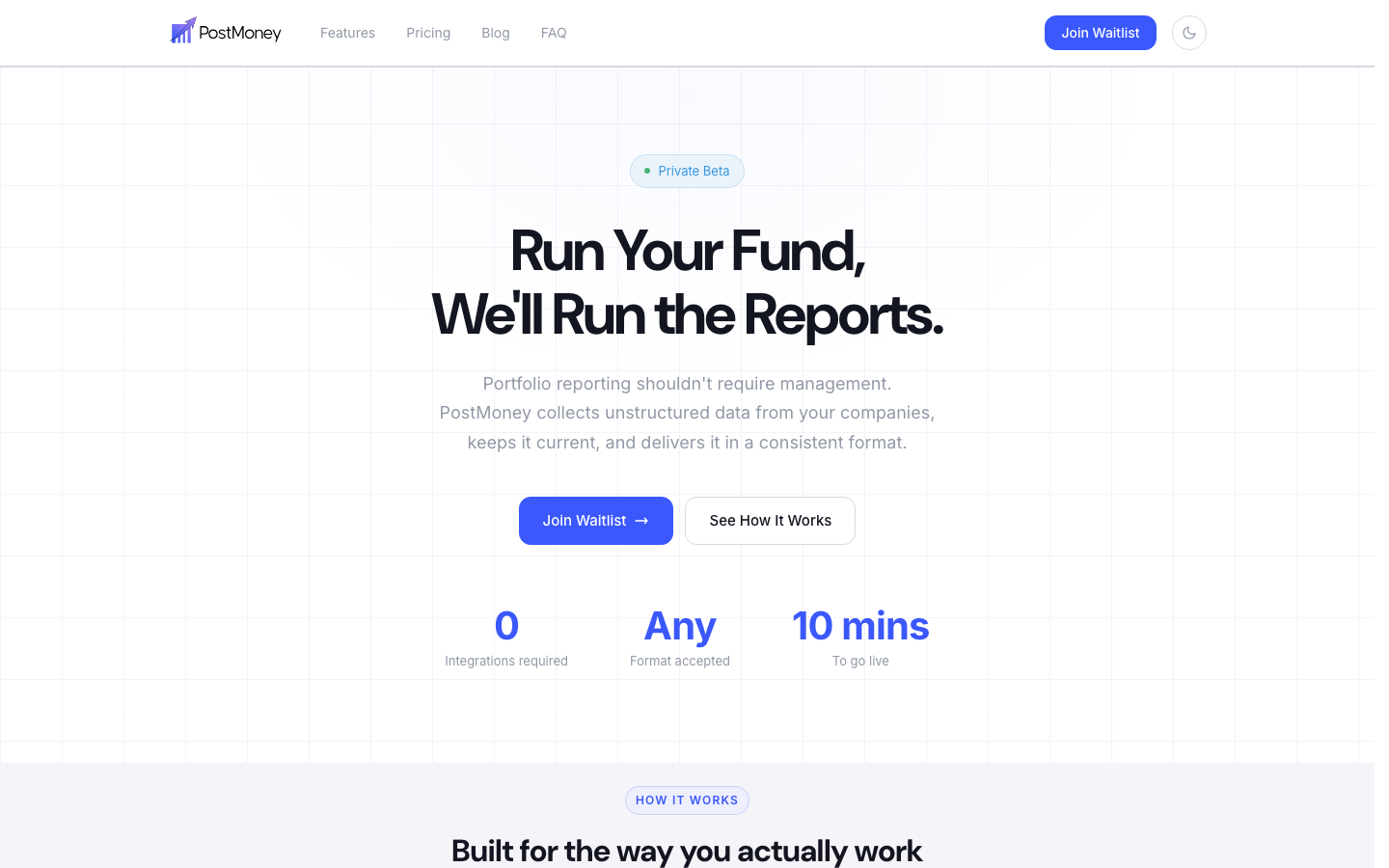
After a year inside a family office watching how much of a fund's time goes into chasing founders
for updates and reformatting them for LPs, I started building PostMoney.
Founders send whatever they already send, an email, a PDF, a spreadsheet, and PostMoney extracts
the KPIs, keeps the dashboard current, follows up on what's missing, and drafts the LP report.
Run your fund, we'll run the reports. It's in private beta with boutique VCs, family offices, and
angel groups.
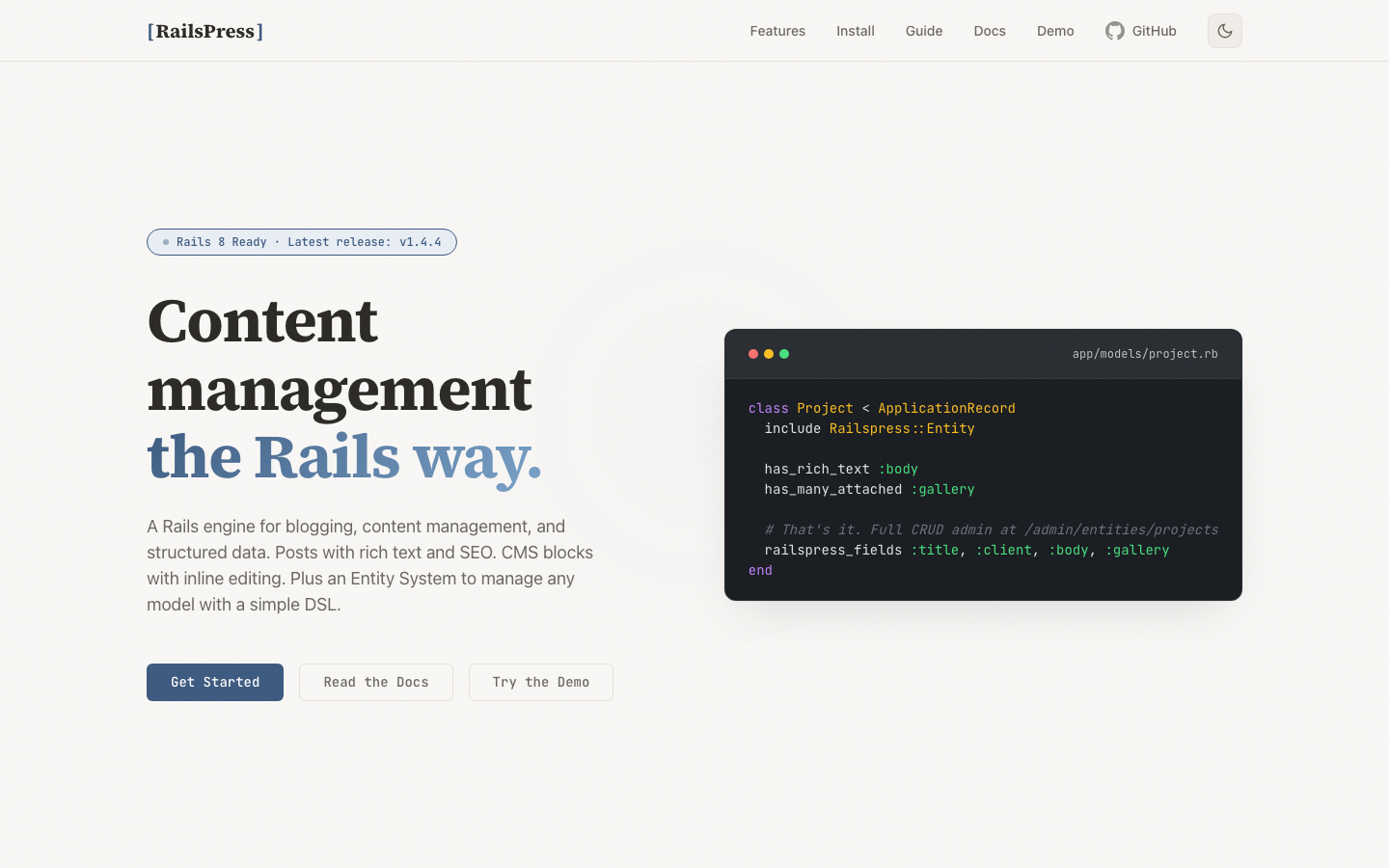
Every site I build needs a blog, some CMS blocks, and an admin, and I was tired of rebuilding the
same thing. So I made RailsPress, a mountable Rails engine that gives
you posts with rich text and SEO, inline editable content blocks, and an Entity system that turns
any model into a fully managed admin with a one line DSL. It powers avi.nyc and a bunch of other
sites I run and the source is on GitHub.
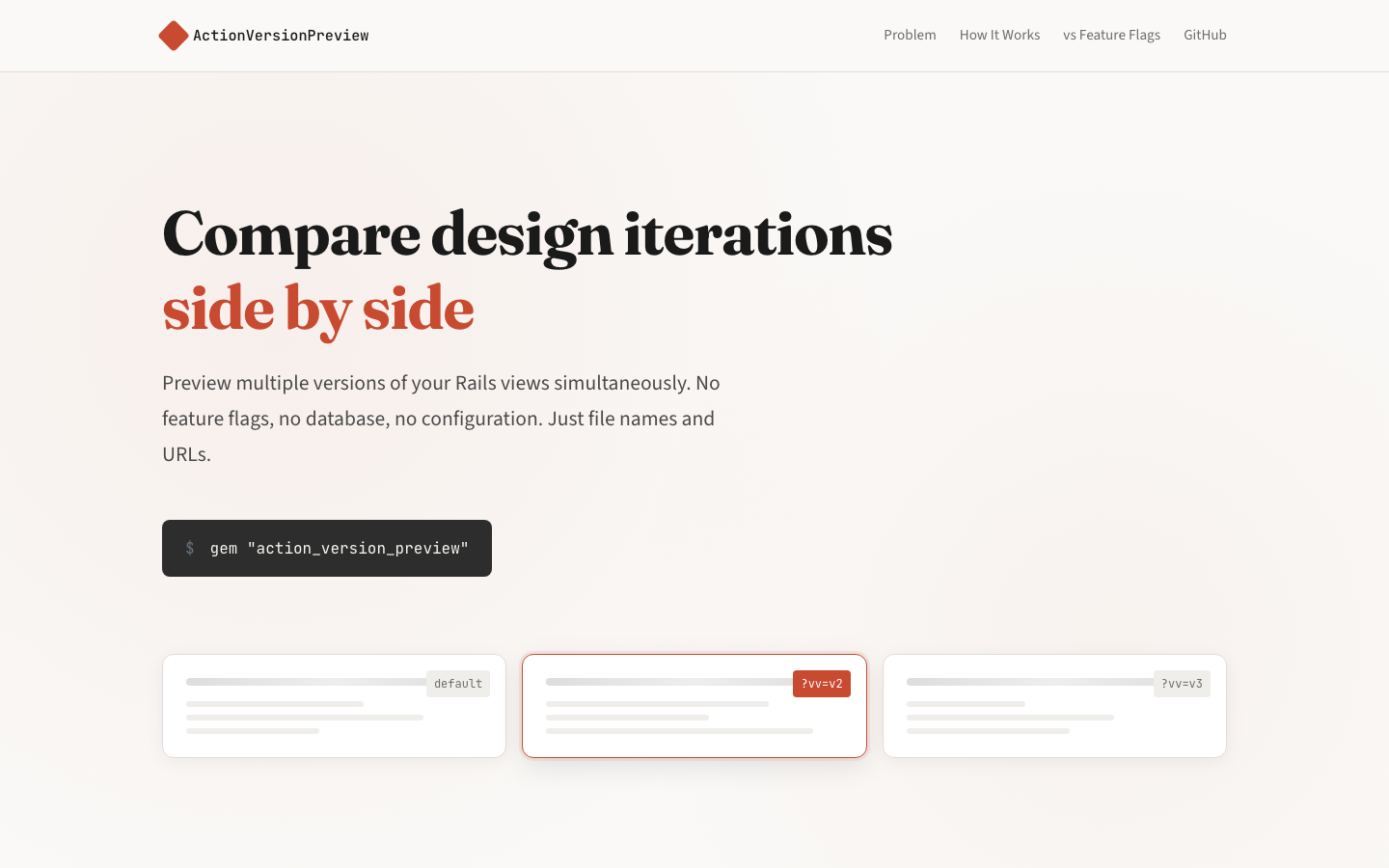
Designing with an LLM has a funny problem: every time you ask for a change you overwrite the last
version and you can never look at two side by side.
ActionVersionPreview is a tiny Rails gem that fixes
that with file names and URLs. Save a second version of a view with a suffix in the file name, add the version to the URL, and
compare. No
database, no config, no feature flags.
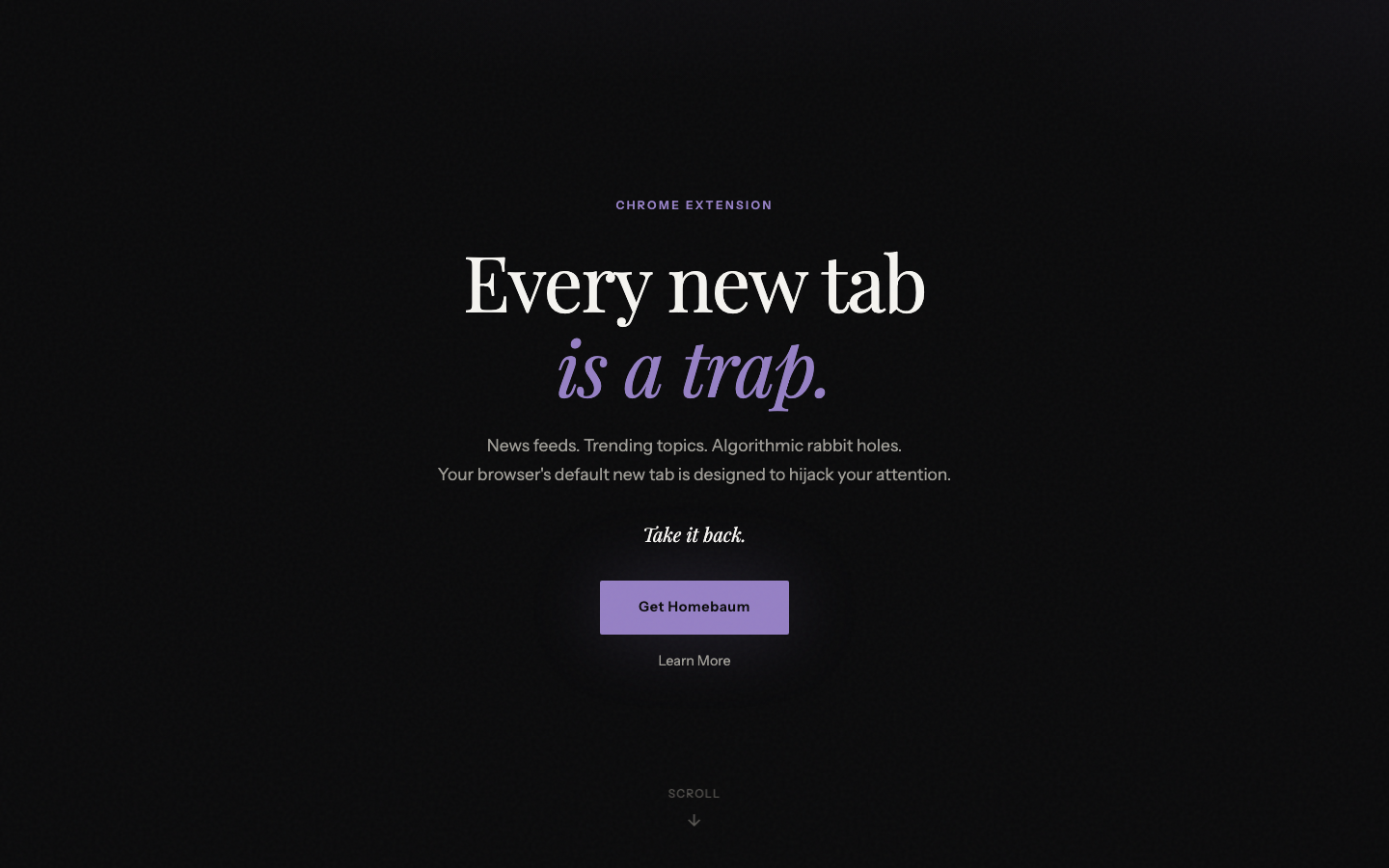
Every new tab is a trap. News feeds, trending topics, algorithmic rabbit holes, all engineered to
hijack your attention before you remember why you opened the tab. I built
Homebaum, a Chrome extension that replaces the new tab page with
three priorities for the day, a few quick tasks, a notepad, and nothing else. No tracking, no
analytics, no nonsense.
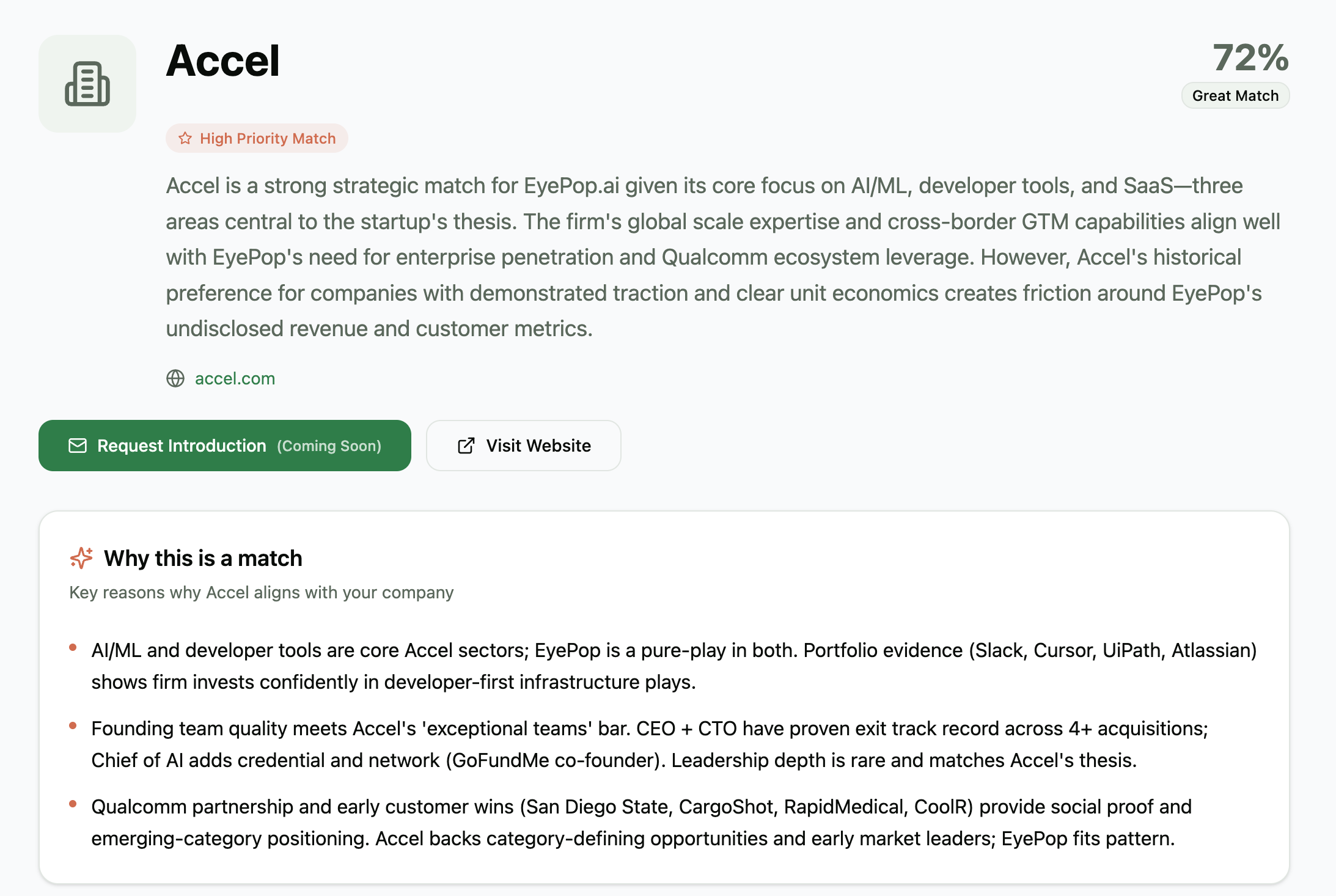
Fundraising is mostly a search problem and founders are terrible at it, myself included. With
VCMatch.ai you upload your deck and it matches you against thousands of
investors using embeddings built from their portfolios, theses, posts, and tweets, then explains
why each one is or isn't a fit across stage, sector, geography, and check size. It started as a
tool for the founders we work with at Innovent and grew into its own product.
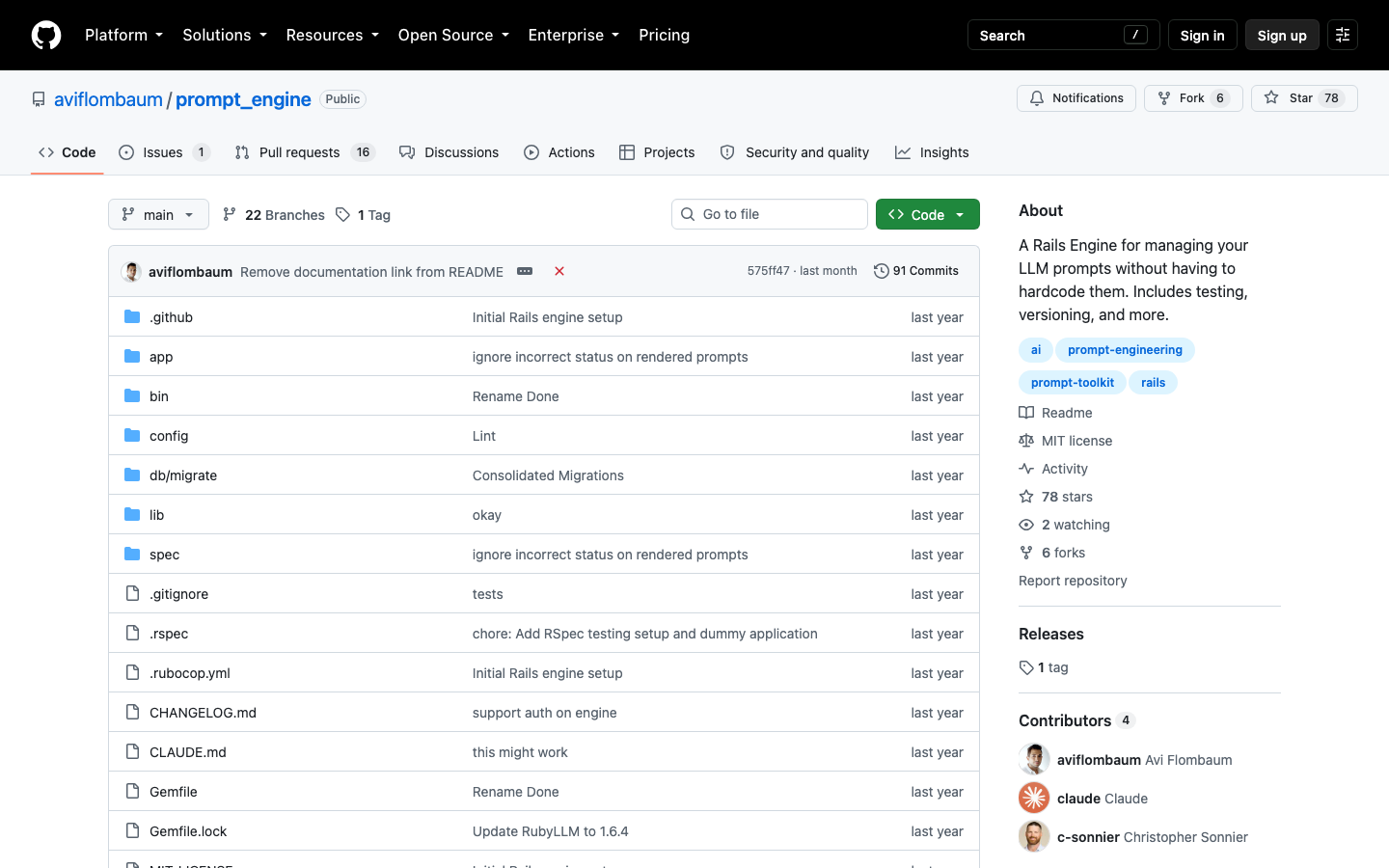
Once you have more than a couple of prompts in a Rails app they end up scattered across the
codebase as giant heredocs. Prompts are data, not code. So I built
PromptEngine, a Rails engine with an admin for
managing prompts, automatic versioning and rollback, variable detection, a playground for testing
against OpenAI and Anthropic, and encrypted key storage. Open source under MIT.
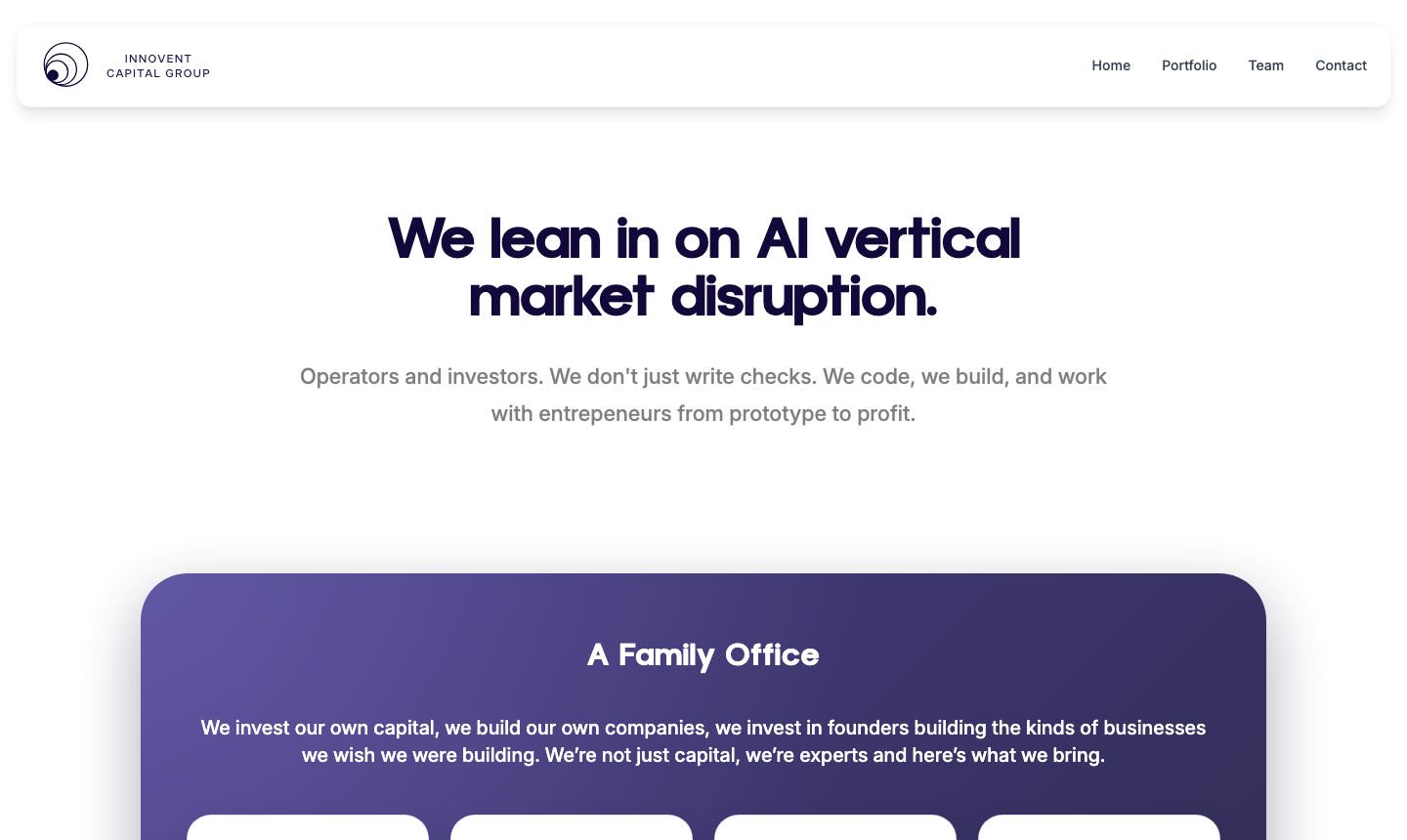
Innovent Capital is a family office that invests its own money in AI vertical market disruption
and actually builds alongside the founders. Operators and investors, not just checks. I joined in
June 2025 as Chief Technology and Product Officer and Entrepreneur in Residence, which means I
spend my time prototyping our own companies, doing technical diligence on the ones we back, and
getting hands on with portfolio teams from prototype to profit. A lot of what's above on this
timeline came out of that work.
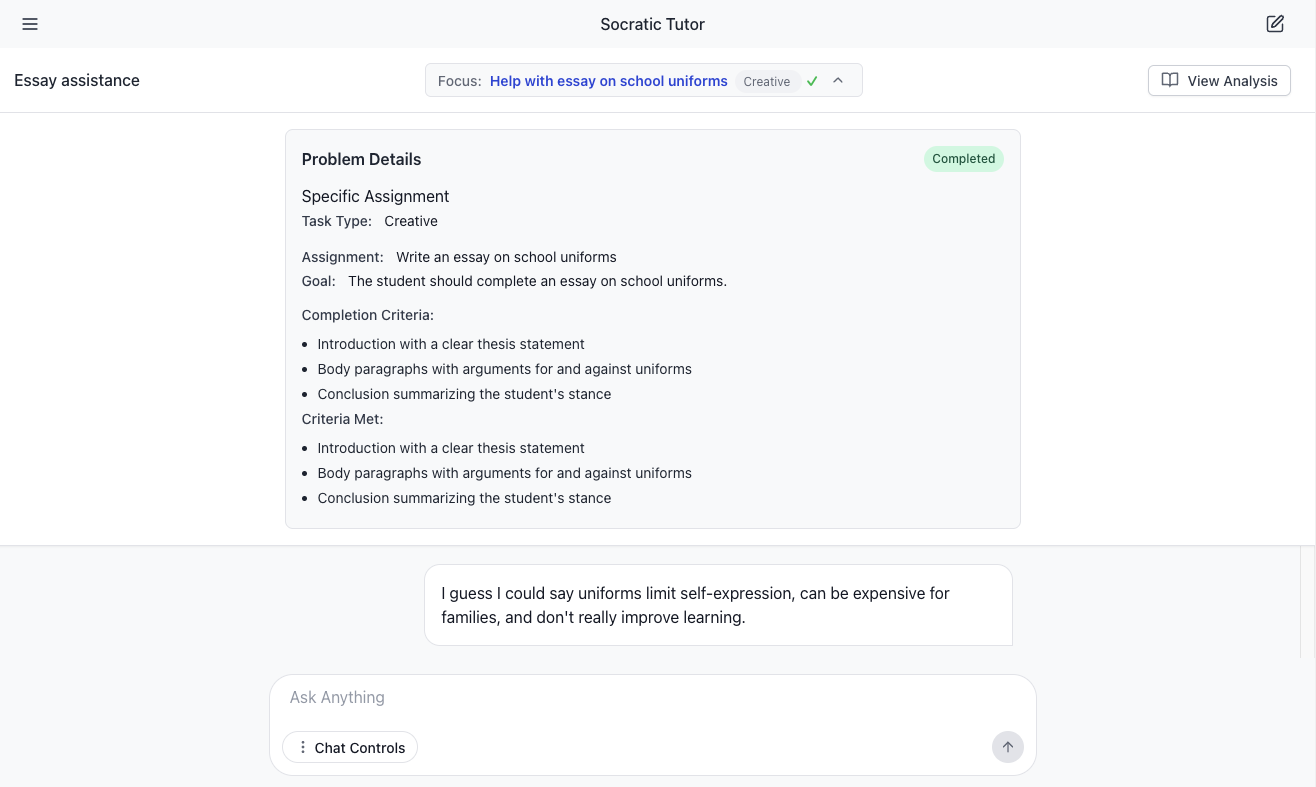
The best teachers I worked with at Flatiron School almost never gave you the answer. They asked
the next question. Socratic Tutor is an AI tutor built on that idea.
It guides students to the solution through questions, watches for frustration in how they respond,
and adjusts the scaffolding when they get stuck. It's the first thing I built that brought
everything I learned teaching ten thousand people to code into an LLM.
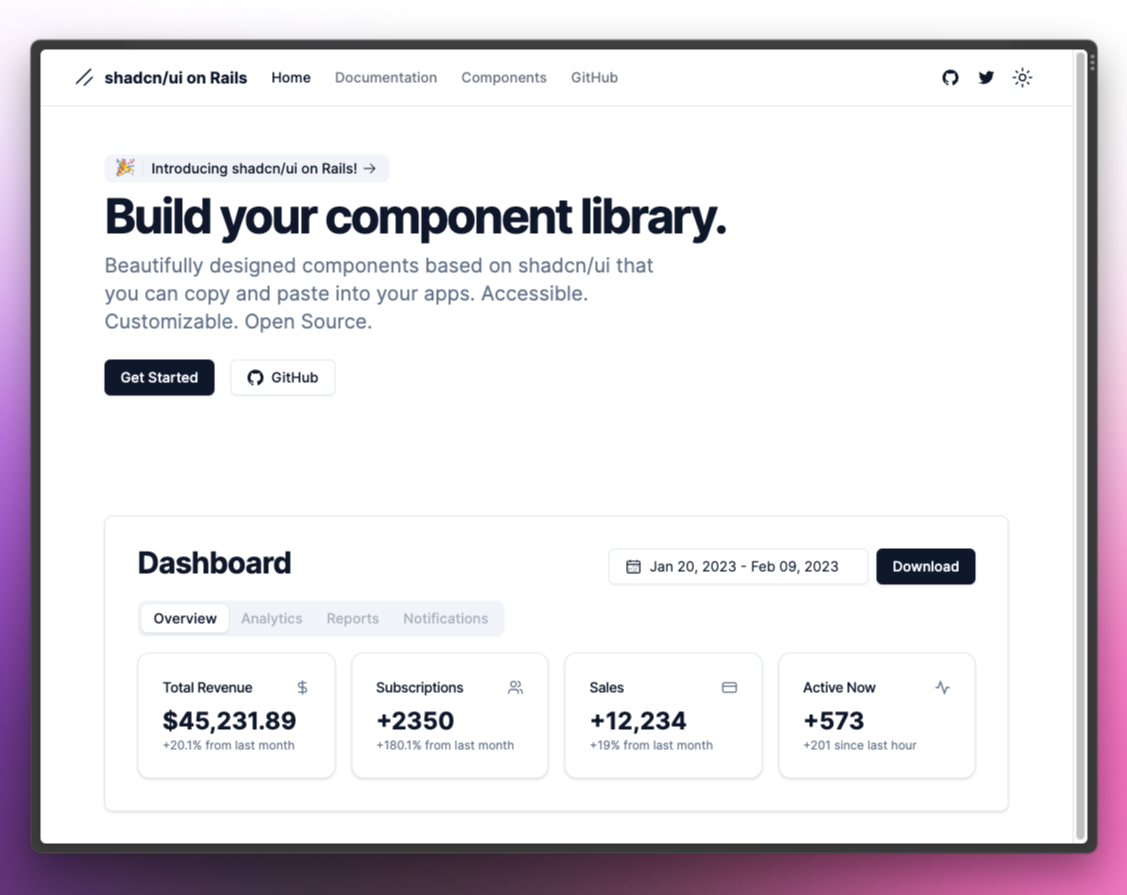
I ported the incredible shadcn/ui to Ruby on Rails, moving all the components over, re-writing the
documentaion, and open sourced it as shadcn on Rails.
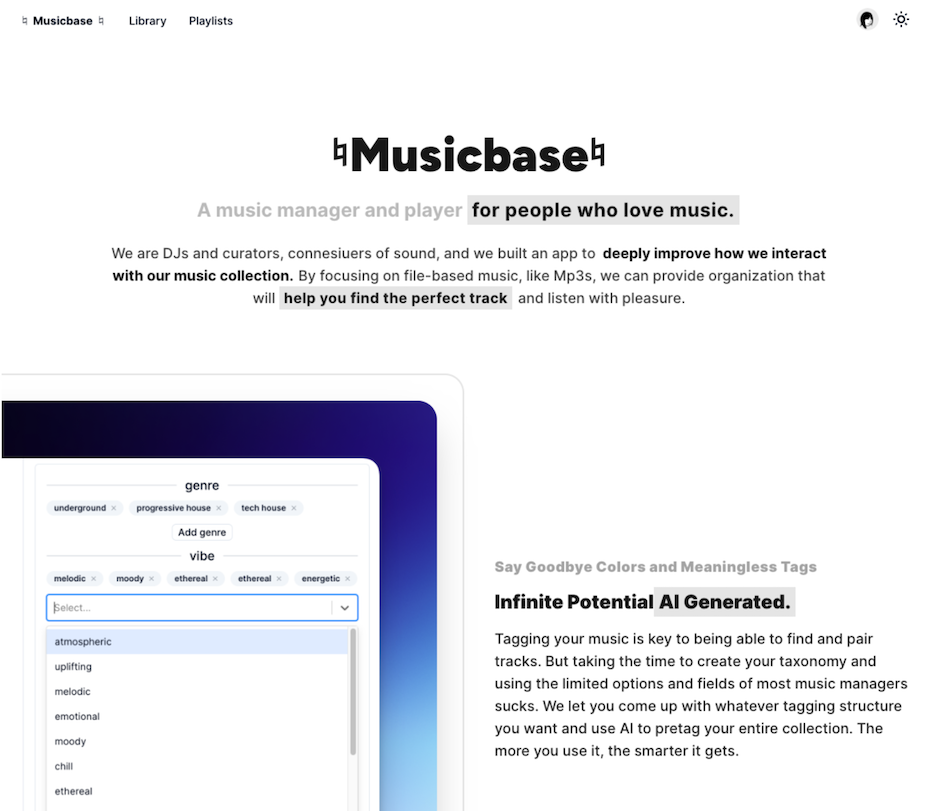
I've been a DJ since I was 19. And since then, managing my music library has been a huge pain. In
2023 I decided to bring my love of music, code, and emerging technologies together to build an
AI-powered music manager, library, and suite of applications. This is just a side project but it's
been super fun.
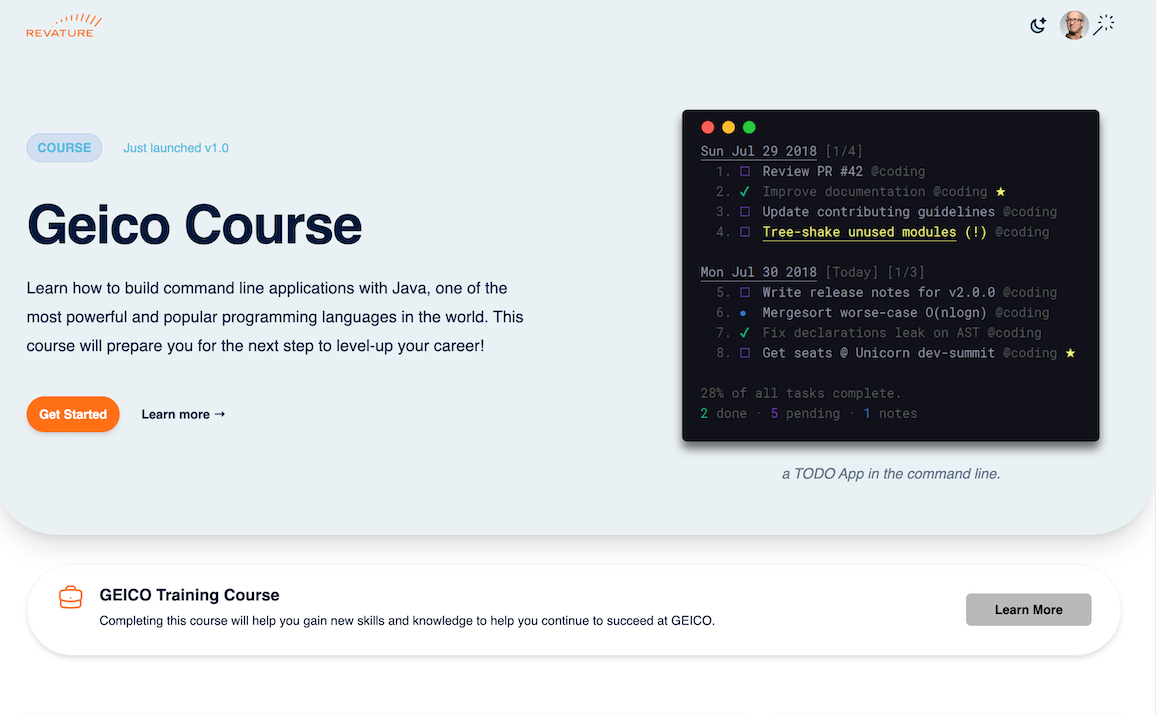
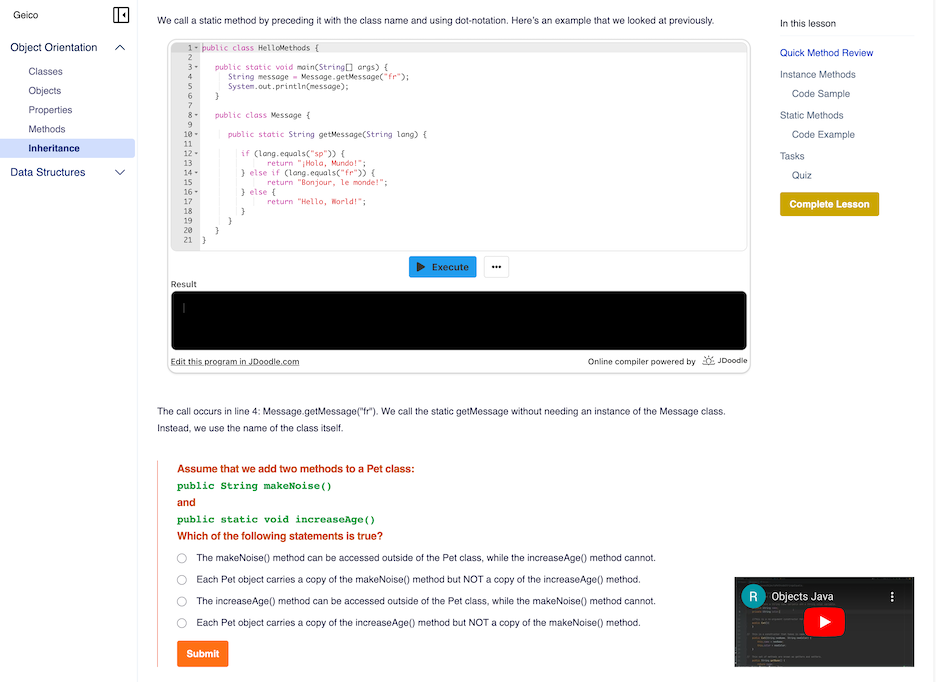
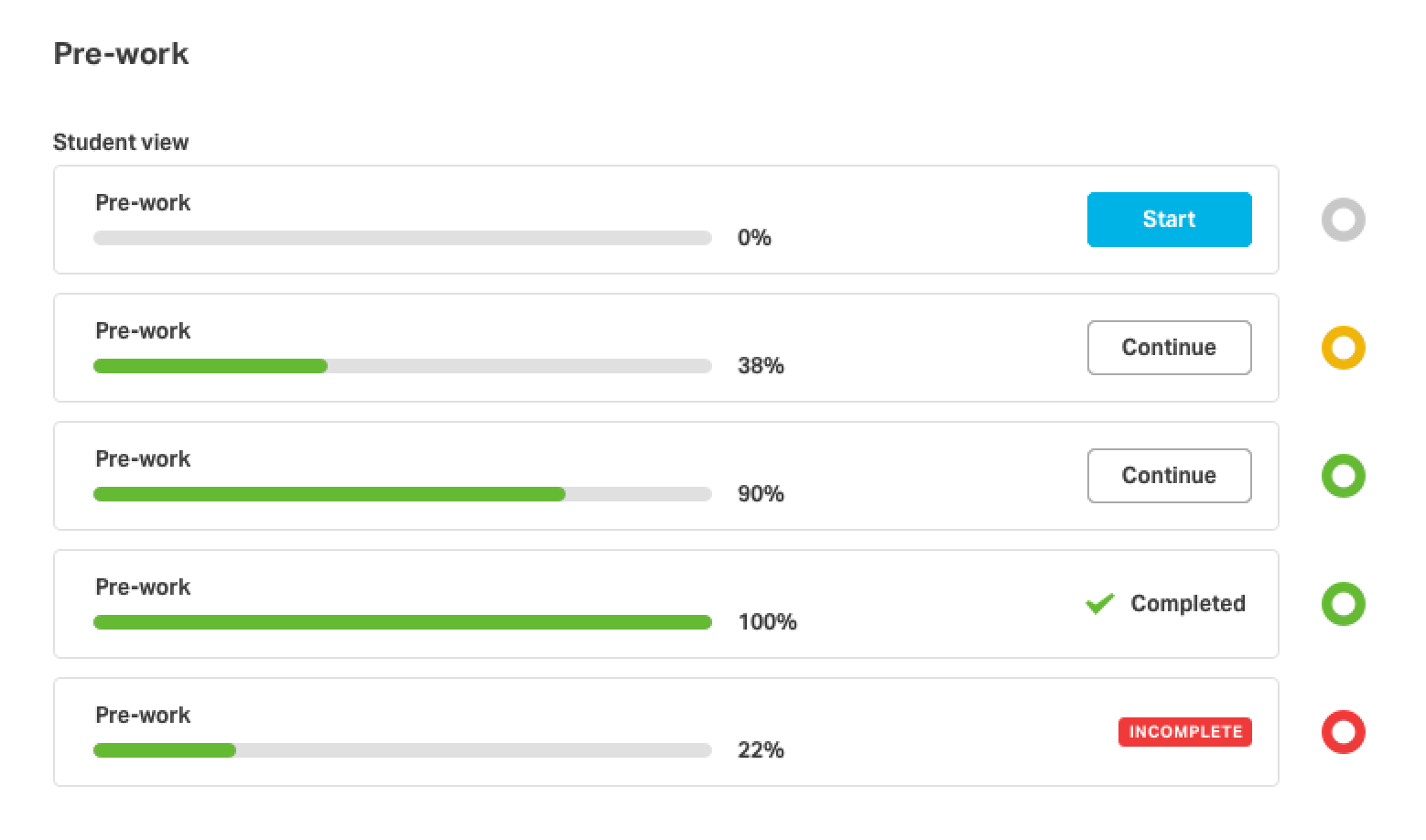
eXa represents the next generation of training at Revature. Providing a modern learning platform to
power not only the pre-training courses like RevUP, but the longer, more advanced, technical
training conducted at Revature, eXa allows Revature to control quality at scale.
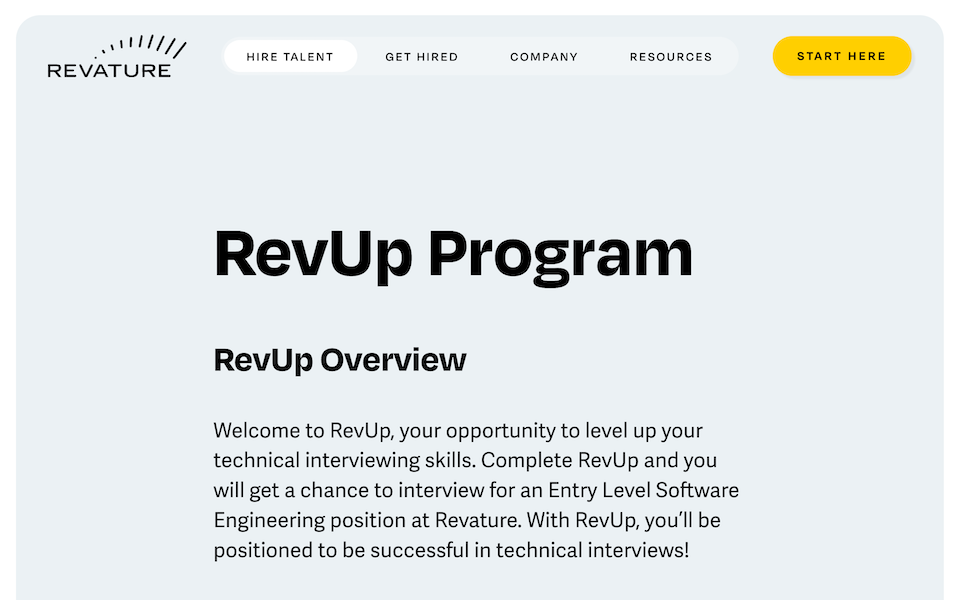
After a few months settling in at Revature, I leveraged my expertise in creating scalable, quality,
online learning programs to develop a free course called RevUP. Leveraging Revature's internal
training platform that I manage with an awesome team, RevUP allows candidates to prepare for their
technical interview with the support of trainers so that they qualify to get hired into our paid
training. RevUP has massively increased Revature's ability to hire by upskilling people willing to
put in the work.
Revature hires people that are interested in careers in technologies and pays them to go through
bootcamps to learn the skills that Revature's clients need. Once they finish learning, Revature
pairs them with one of their clients and they can work for up to two years as a consultant to gain
experience and start their careers in tech. I joined as Chief Product Officer to help Revature
leverage technology and pedagogy in to scale their training programs and train more people. Read
more about
Why I Joined Revature
What a roller coaster! We met Adam Neumann and the team at WeWork and shared a vision where
community was at the heart of work and learning. With WeWork's massive physical footprint and the
thousands of companies in WeWork's looking for tech talent, we saw an opportunity to make Flatiron
School global and took it.
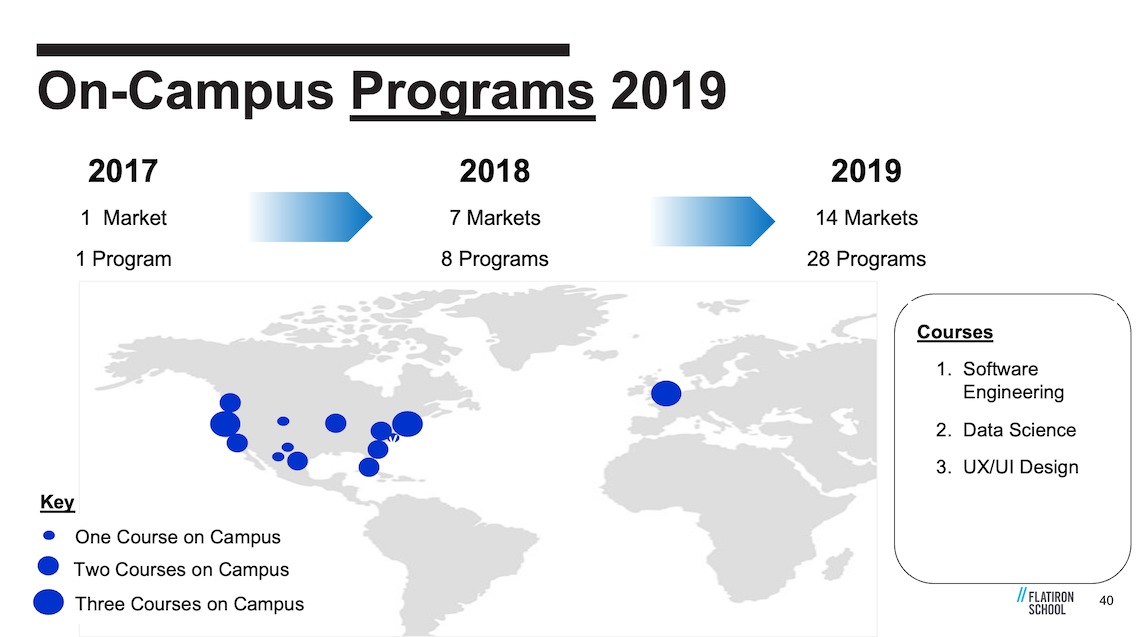
Within two years we had opened thirteen campuses world wide, grew the company to over 500 people and
hit high eight figures in yearly revenue. A year and a half after that, in June 2020, WeWork sold
Flatiron School to Carric Capital and I left to pursue my next adventure.
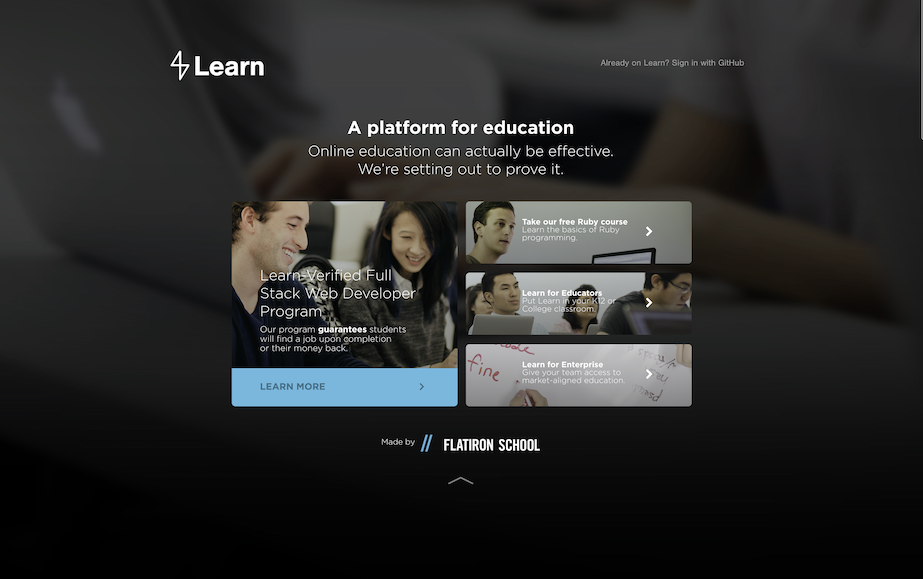
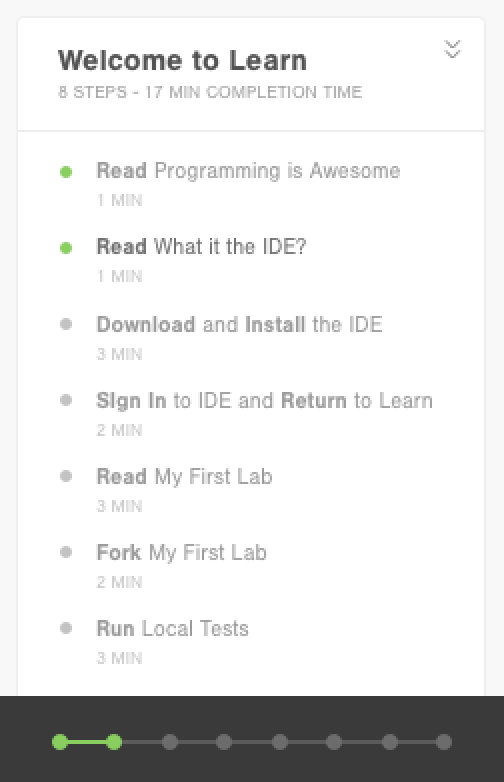
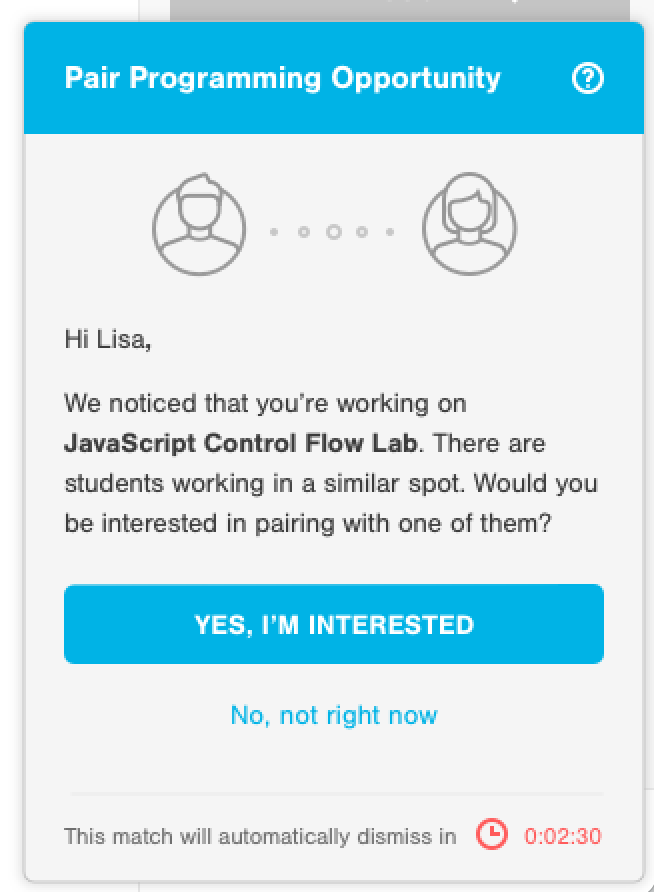
There is so much I want to say about Learn.co that I felt it required it's own section . Learn was the Learning Management System I (and an incredible team) built at Flatiron School to power our classes, especially our online campus. I still believe Learn.co was the most effective learning platform built and it contributed millions in revenue and growth to the school and graduated thousands of people into new careers and lives.
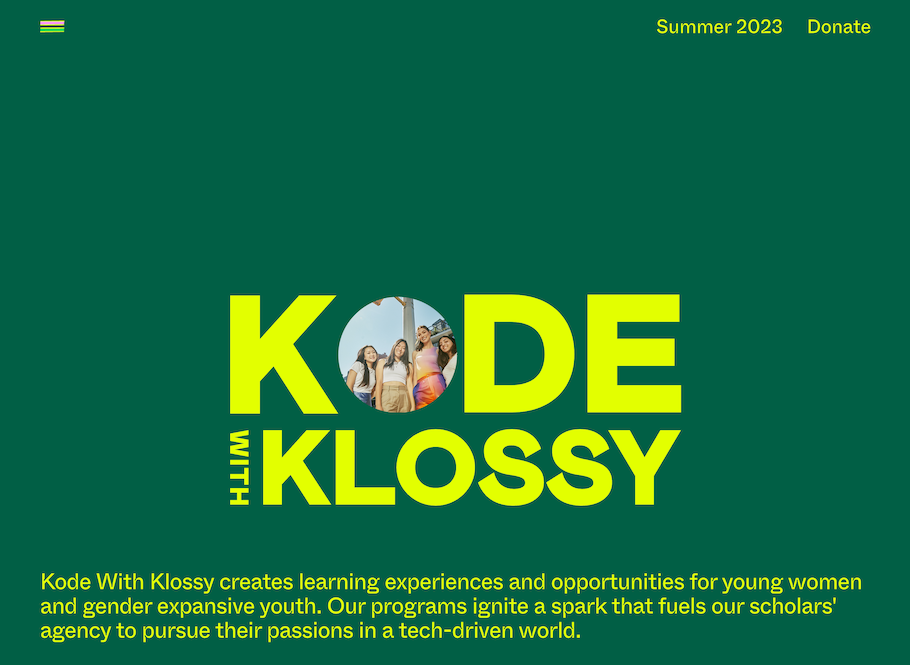
When I started teaching myself to code as a kid, I totally knew that it would one day lead me to the
opportunity to work with a super model. Through some miracle, I got the opportunity to learn with
Karlie Kloss sometime in 2015 and she was so inspired by code and technology that she wanted to give
back to the community. Together we started Kode with Klossy to teach young women how to code and
give them the confidence to pursue careers in technology.
I helped design the program and write the curriculum and have been involved in the program ever
since as a mentor and advisor. But the real credit goes to Karlie and her team for the incredible
work they have done and the women they have impacted. Karlie is an incredible super role model and
what she has built over the last seven years with Kode with Klossy surpasses even the wildest dreams
of younger Avi reading programming books in Barnes and Nobles.
The Flatiron Annual Report (or FAR as it was known internally) was a microsite we made twice that
detailed our progress during the last year. The first one we made actually covered years 2 and 3 of
Flatiron School, 2013 and 2014. I was always very proud of the school so getting a chance to focus
reasources to telling our story meant a lot to me. And the team just crushed execution on this site.
I think I have the source code somewhere and will try to put it up for posterity, but the video
above shows the site and how it worked.
Achievements
In the first two and a half years at the school we:
Graduated our first class with 100% job placement.
Won NYC Take the H.E.L.M grant and moved into our first campus on Wall St.
Won numerous hackathons including NYC's Big Apps and the AT&T Hackathon.
Launched the Web Development Fellowship in partnership with the NYC EDC.
Created an iOS Immersive
Raised a $5.5M Series A round of funding.
Hit 50% gender parity in our classes.
Partnered with Fog Creek on a Women in Tech Scholarship.
Started classes for high school students.
Was a pretty exciting time in my life to say the least.
About 6 months into Flatiron School, Adam, who is incredible at applying for things, got us accepted
to compete for the Hire and Expand in Lower Manhattan grant, a city competition for $250,000 if you
moved your company to Wall st. We won and over the spring and summer began building out our Wall at
campus, where the school would be headquartered till today. At the same time, we began getting VC
interest in the school and with our expansion downtown and the bootcamp industry exploding, we
effortlessly raised 5 million from CRV and Matrix Capital.
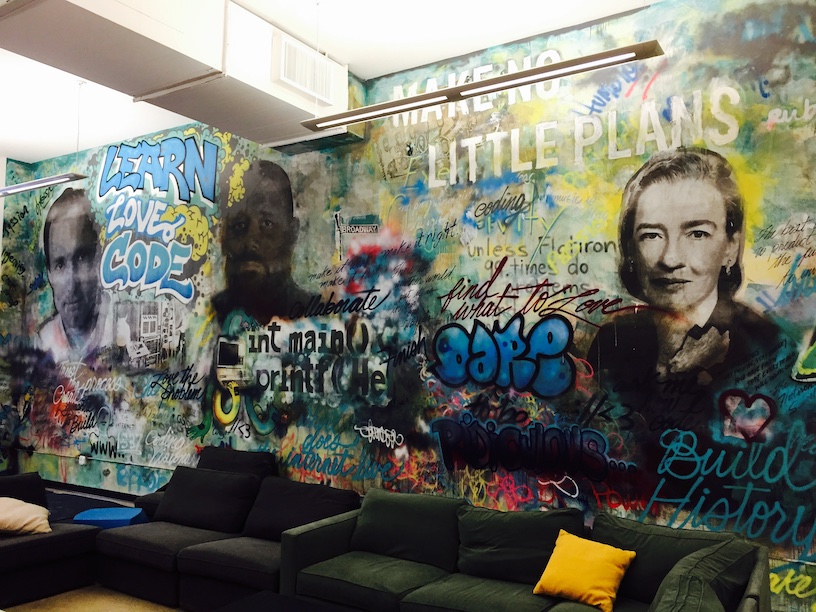
Suddenly we were running three courses at a time, I had a faculty of eight instructors, and the
school began growing at a rapid clip. Slowly we ended up taking the entire 2nd floor of 11 Broadway
for our campus, classrooms, and offices. The centerpiece of our campus was a massive graffiti wall
celebrating technology and grit.
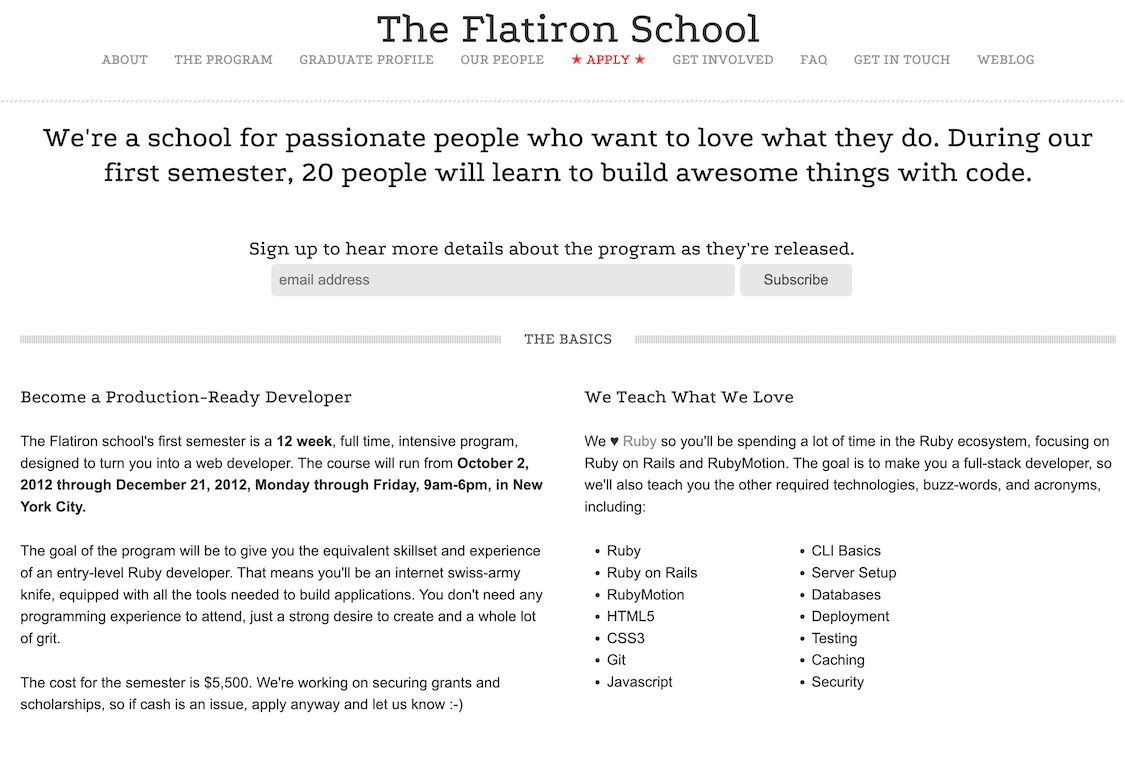
Despite dropping out of college, I found myself teaching people how to code, mentoring them, and
getting them jobs after I left Designer Pages. Adam Enbar reached out to me and told me we should
start a school. Flatiron School was born. At first it was just me in a loft with 20 grace souls.
Making it up as I went led to the most creative period of my life as I dove headfirst into learning,
technical training, career development, and education technology.
After 12 weeks I spent a month getting my class jobs before the next semester began. And that’s how
it went for the first year. We sold out every class and got most everyone a job in product and
engineering. And then things really started growing.
Sometime around the fall of 2008 I left Whitehaven to start my first company with my friend from
high school, Jake Slevin. He was an architect at the time and was telling me that basically what he
had been doing so far at his first job was specing products. Manually searching through manufacturer
catalogs and finding products that were needed in the various projects of the firm and photocopying
their spec page.
We decided to build a search engine and project management suite for specing products. We called it
Designer Pages. We raised a small seed round from friends and family and started building. The
company did pretty well, Jake still runs the company. I'm proud to say that every company I started
is still in business and self-sustaining.
I learned so much about startups, collaboration, architecture and design, programming, and myself
during this time. And it was at Designer Pages that I started programming in Ruby and Ruby on Rails,
which has made a huge difference in my life.
There is so much more to say about Designer Pages but I'll leave it here for now.
Indexed over 1 million products for thousands of manufacturer websites and normalized product
metadata to provide functional search across dozens of product attributes and facets. Created an
algorithm to serve relevant advertisements within search results based on the results of the search
rather than the keyword and filed an approved patent for the process. Grew the company to a team of
12 and over $1 million in revenue. Creat
Built algorithm to predict the settlement value of personal injury lawsuits in Java integrating
with Westlaw and Lexus Nexus for historical data.
Created a workflow management application to intake the claims and verify the details of the
lawsuit from attornies and medical records.
Implemented a VoIP Call Center using the open source Astrik PBX that processed over 10,000 calls a
day.
Designed workflow management to process over 5,000 cases a day.
Tweefle was a fullscreen Twitter wall I built at Designer Pages for the NeoCon trade shows in
Chicago. It displayed live tweets tagged with the event hashtag (#NeoCon09, #NeoCon10, #NeoCon11)
streaming across a large display: profile photos, tweet text, and timestamps flowing in real time.
The wall ran on a Rails app that pulled from the Twitter Streaming API, filtered and moderated
tweets, and rendered them with animated transitions. It was installed on large-format screens at
three consecutive NeoCon events from 2009 to 2011.
To encourage people tweeting about the event in real time, every hour we picked a tweet from the
stream at random and gave out a prize. It turned the wall into a game. Attendees would tweet with
the hashtag hoping to see their name pop up on the big screen and win something from one of the
exhibiting brands. It's revived in the archive.
I dropped out of University of Wisconsin in the middle of my junior year to start working at the
Whitehaven Group, a litigation financing firm as lead engineer building an Investment Management
System.
What I built could predict the average settlement of personal injury lawsuits using a variety of
variables and previous outcomes. The firm would then safley loan money to plantiffs to ensure that
the plantiff could hold out for the fair value of their lawsuit and not settle prematurely due to
financial hardship. For example, imagine you got injured at work and are going to get a settlement
for your injury but meanwhile, you are out of work from your injury and have bills. Insurance
companies use this leverage to offer you an early settlment of less money. We loaned you money using
essentially your future outcome as collateral.
Besides the algorithm, I built a web-based (in 2005!) application to help process all these loans
and track the progress of the lawsuit and loan. I used ASP and then ASP.NET with C# for the web app
and deployed it to IIS intranet.
As the firm grew, I moved our call center in-house by building a a CTX using the open source Astrik
PBX and integrated it into our advertising and media buys along with the web application agents and
analysts used to manage the loans.
I was 21 years old and managing over $60 million in assets in software I built. I stayed at the firm
for 3 years and was promoted to Director of Information Technology and managed a team of 3
developers.
Built algorithm to predict the settlement value of personal injury lawsuits in Java integrating
with Westlaw and Lexus Nexus for historical data.
Created a workflow management application to intake the claims and verify the details of the
lawsuit from attornies and medical records.
Implemented a VoIP Call Center using the open source Astrik PBX that processed over 10,000 calls a
day.
Designed workflow management to process over 5,000 cases a day.
My high school blog. Flombaum Dot Com ran from 2001 to 2003 with a daily dose of posts, essays,
fiction, photos, and saved chat logs, all hand-built with rollover GIF logos and a comments system
I wrote myself. It's the first thing I ever put on the internet, and it's
revived in the archive exactly as it was.